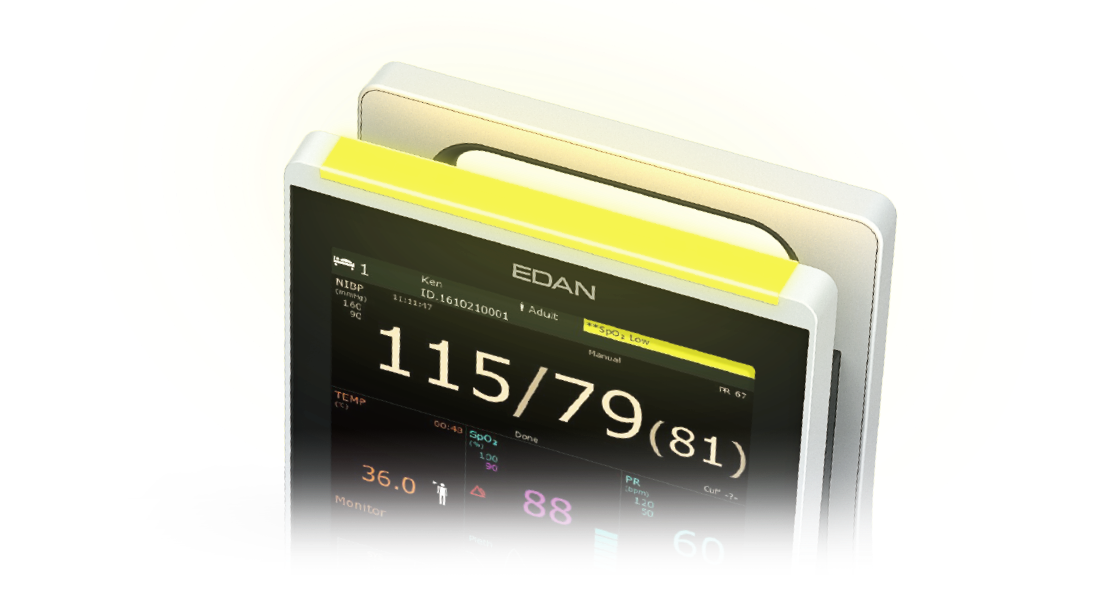
Accurate physiological readings are essential in patient care, especially when monitoring occurs outside conventional clinical environments. Whether during transport or bedside checks, fluctuations or interruptions in vital sign data can lead to uncertainty and delay. A hospital patient monitor that maintains stable signal acquisition while being moved supports clinicians in making timely decisions and tracking trends reliably over time.
Understanding the Challenges of Mobility
Mobility introduces variables that can affect the quality of vital sign measurements. Movement, changes in position, or even electromagnetic interference from surrounding equipment might influence signal capture for parameters such as oxygen saturation or blood pressure. In a busy ward or during transport between departments, these inconsistencies can impact efficiency and confidence in data. For a portable vital signs monitor, robust signal stability means fewer repeated measurements and better continuity in patient records. Devices designed with strong internal processing and noise resistance help clinicians maintain accuracy even in dynamic conditions.
Design Features That Support Reliable Signals
The EDAN approach to vital signs monitoring combines smart hardware and thoughtful software integration to support steady measurements. The EDAN iM3 Vital Signs Monitor reflects this focus with adaptive operating modes that include continuous monitoring and spot checks, allowing responders to capture real-time vitals without losing track during transitions between settings. It stores extensive measurement data and trend reviews, supporting both short assessments and prolonged monitoring sessions.
Built-in connectivity options such as Wi-Fi and USB ensure that data transfers remain consistent and uninterrupted when linked to electronic systems. This is critical in environments where a portable vital signs monitor may switch between standalone use and integrated network connections mid-shift. The device’s internal memory accommodates large volumes of readings, helping preserve signal continuity even when connectivity changes.
Balancing Movement and Precision
Signal stability in movable monitors comes down to equipment that anticipates real-world use. By combining lightweight design with high-quality sensors and adaptive work modes, the EDAN iM3 helps reduce artifacts in measurements that might occur due to motion or rapid changes in monitoring context. Features like 360° visual indicators and internal alarms also support clinicians in recognizing and responding to signal aberrations promptly.
Conclusion
For both routine assessments and complex care scenarios, maintaining stable signals from a hospital patient monitor is essential. Devices like the EDAN iM3 improve the reliability of data capture when movement is unavoidable, ensuring that vital signs remain consistent and actionable regardless of setting. Investing in a well-designed portable vital signs monitor contributes to clearer clinical insights and greater confidence in every measurement.

