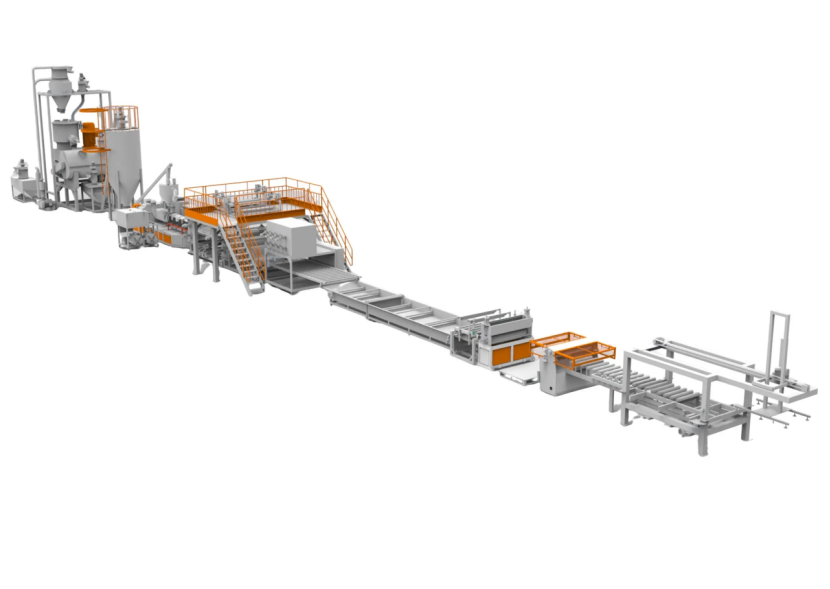
In large-scale industrial manufacturing, power quality is a silent variable that can significantly impact the bottom line. For facilities operating high-torque machinery, voltage dips—short-term reductions in RMS voltage—pose a technical risk to the continuity of the extrusion process. Unlike a total blackout, a dip can be deceptive, often providing enough power to keep lights on while causing sensitive motor drives and PLC controllers to trip, leading to immediate production stalls.
The Technical Impact of Power Instability on an LVT Flooring Production Line
Maintaining a consistent LVT flooring production line requires a stable electrical environment because the process relies on synchronized thermal and mechanical energy. When a voltage dip occurs, the variable frequency drives (VFDs) that control the twin-screw extruders may trigger an undervoltage protection fault. This results in an immediate loss of torque, causing the polymer melt to stagnate in the barrel. If the temperature is not maintained during this downtime, the PVC composite can degrade, requiring a labor-intensive “cold start” and significant material waste.
Furthermore, power quality issues affect the calendering section. Precise speed synchronization between the rollers is necessary to maintain the correct tension and thickness of the LVT sheet. A momentary dip can cause “chatter marks” or thickness fluctuations, rendering the entire batch of flooring unsuitable for B2B commercial standards. Implementing power conditioning units or Uninterruptible Power Supplies (UPS) for the control cabinets is a common industrial strategy to bridge these millisecond gaps and ensure the logic systems remain online during transient fluctuations.
Electrical Robustness from Boyu
As an industry leader in heavy-duty extrusion technology, Boyu designs their equipment to withstand the rigors of diverse industrial power grids. Their LVT flooring extrusion line is equipped with high-quality electrical components and advanced PLC systems that feature superior EMI filtering and surge protection. These systems are engineered to handle the high starting currents of large motors while maintaining stable communication between the various sensors and actuators on the line.
The technical integration of their hardware ensures that even in regions with less stable power infrastructure, the machinery remains resilient. By utilizing robust inverter technology and high-tolerance heating elements, Boyu provide a manufacturing platform that prioritizes uptime and reliability. Their commitment to B2B operational excellence means that their systems are not just built for performance, but for the practical challenges of global industrial environments.

