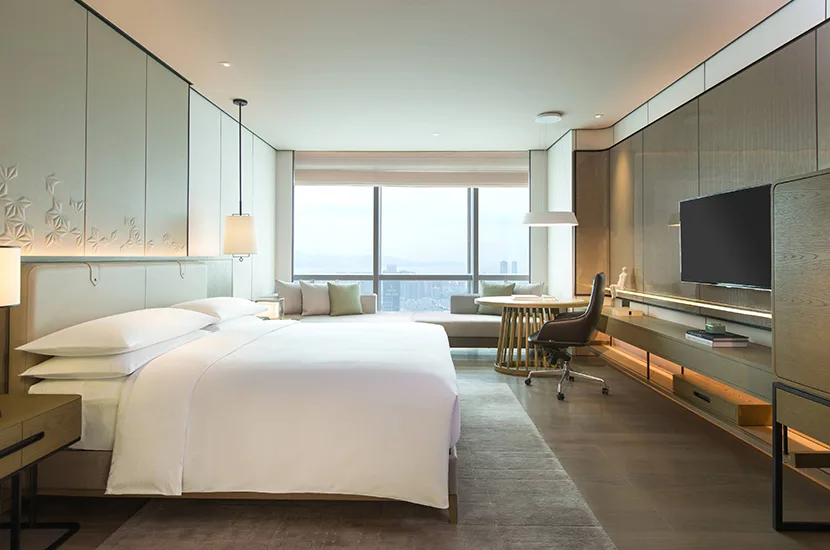
Replacing damaged casegoods just two or three years after a property opens represents a severe financial drain for hospitality operators. Premature wear often stems from selecting items based on residential aesthetic appeal rather than commercial-grade engineering.
Specifying the right hotel room furniture early in the development phase helps mitigate these costly replacement cycles. Evaluating pieces through a commercial lens supports long-term asset value. Shifting the focus from simple aesthetics to comprehensive structural analysis aids in protecting procurement budgets from unexpected future liabilities.
- Spatial Flow and Clearance Requirements
Initial architectural plans sometimes fail to account for the true physical footprint of open drawers and extended chair legs. Designers need to verify that furnishings allow sufficient walking clearance when guests interact with the space. Maintaining adequate distance between beds and dressers aids in preventing luggage damage to wood veneers.
Proper spatial planning enables smoother guest circulation within compact floor plans. Mock-up room evaluations provide an opportunity to test these clearances physically before full-scale manufacturing begins. Adjusting nightstand depths or wardrobe door swings during the mock-up phase helps avoid operational bottlenecks once the property welcomes guests.
- Material Durability for High-Turnover Environments
Hospitality spaces experience intense daily usage, requiring robust surface materials that can withstand unpredictable guest behavior. High-pressure laminates and engineered quartz tops offer strong resistance against water rings, scratches, and heat damage from styling tools. These materials support a pristine appearance even after thousands of check-ins.
When evaluating wood finishes, selecting multi-layered polyurethane clear coats helps protect against chemical cleaning agents used by housekeeping staff. Durable edge-banding also supports the structural integrity of nightstands and writing desks. Preventing moisture intrusion at the seams aids in extending the usable life of standard casegoods over many years.
- Integrating Technology and Connectivity
Modern travelers expect seamless access to power and charging ports directly from their beds or workstations. Routing cables through pre-drilled channels in headboards and desks helps maintain a clean, uncluttered visual aesthetic. This level of cable management supports a more relaxing environment free from tangled wires.
Surface-mounted USB outlets or hidden wireless charging pads integrated into nightstands facilitate convenient device management for international travelers. Planning for these electrical integrations during the initial furniture design phase prevents costly on-site modifications later. Factory-installed power hubs enable faster room setups during the final installation period.
- Leveraging Custom Hotel Room Furniture Capabilities
Standard catalog items occasionally fall short when dealing with irregular room dimensions or unique brand narratives. Sourcing custom hotel room furniture allows interior architects to tailor dimensions, finish tones, and upholstery fabrics to precise project specifications. Following this strategy creates unified styling that carries through the whole hotel.
Tailored fabrication enables designers to maximize storage efficiency in awkward alcoves or spaces with low ceiling clearances. By adapting the proportions of wardrobes and luggage benches, developers can optimize the available square footage. This flexibility aids in creating a more comfortable layout without sacrificing essential guest amenities.
- Maintenance and Housekeeping Efficiency
The daily operational burden on housekeeping teams heavily depends on the physical design of the furnishings. Wall-mounted headboards and floating nightstands facilitate faster, more thorough floor vacuuming beneath the units. Cleaning hard-to-reach corners supports stricter hygiene standards and speeds up daily room turnovers.
Selecting stain-resistant performance fabrics for lounge chairs helps reduce the time spent on deep cleaning and spot treatments. Minimizing intricate carvings or deep grooves in wood surfaces prevents excessive dust accumulation. A minimalist furniture layout helps control on-site labor costs while maintaining a clean environment for guests.
- Hardware Quality and Structural Joinery
Concealed structural components dictate the lifespan of heavily used casegoods and seating in commercial settings. Specifying heavy-duty, soft-close drawer glides helps reduce noise transmission between rooms during late-night hours. Quality hardware prevents drawer misalignment and sticking, which often frustrates guests and triggers maintenance calls.
Commercial-grade mortise-and-tenon joinery, combined with reinforced corner blocks, provides vital stability for upholstered seating. Proper kiln-drying of timber frames helps prevent warping in humid coastal climates. Experienced suppliers such as BFP Furniture enable teams to source robust pieces built for the rigours of hospitality‑sector use.
- Evaluating Delivery and Installation Logistics
Procurement success extends beyond the factory floor; it relies heavily on coordinated site delivery and assembly. Casegoods require heavy-duty corrugated packaging with reinforced corner protection to survive long-distance ocean transit and local site handling. Proper crating aids in minimizing the risk of receiving damaged goods.
Staggering deliveries floor-by-floor helps avoid staging area bottlenecks amidst active construction zones. Clear carton labeling indicating specific room numbers supports faster distribution by local labor crews. Structured logistics planning enables installation teams to maintain strict pre-opening schedules, mitigating the risk of delayed property launches.
Balancing Aesthetics with Operational Realities
Navigating a hospitality development requires balancing immediate visual impact with ongoing operational demands. Thoughtful material selection, structural engineering, and spatial planning contribute to spaces that look inviting while resisting rapid physical degradation over time.
A structured procurement strategy aids developers in managing initial budgets while supporting the long-term durability of the investment. Evaluating these core factors facilitates a smoother transition from active construction to daily operations. Prioritizing commercial engineering ultimately helps establish a reliable and comfortable environment for guests.

