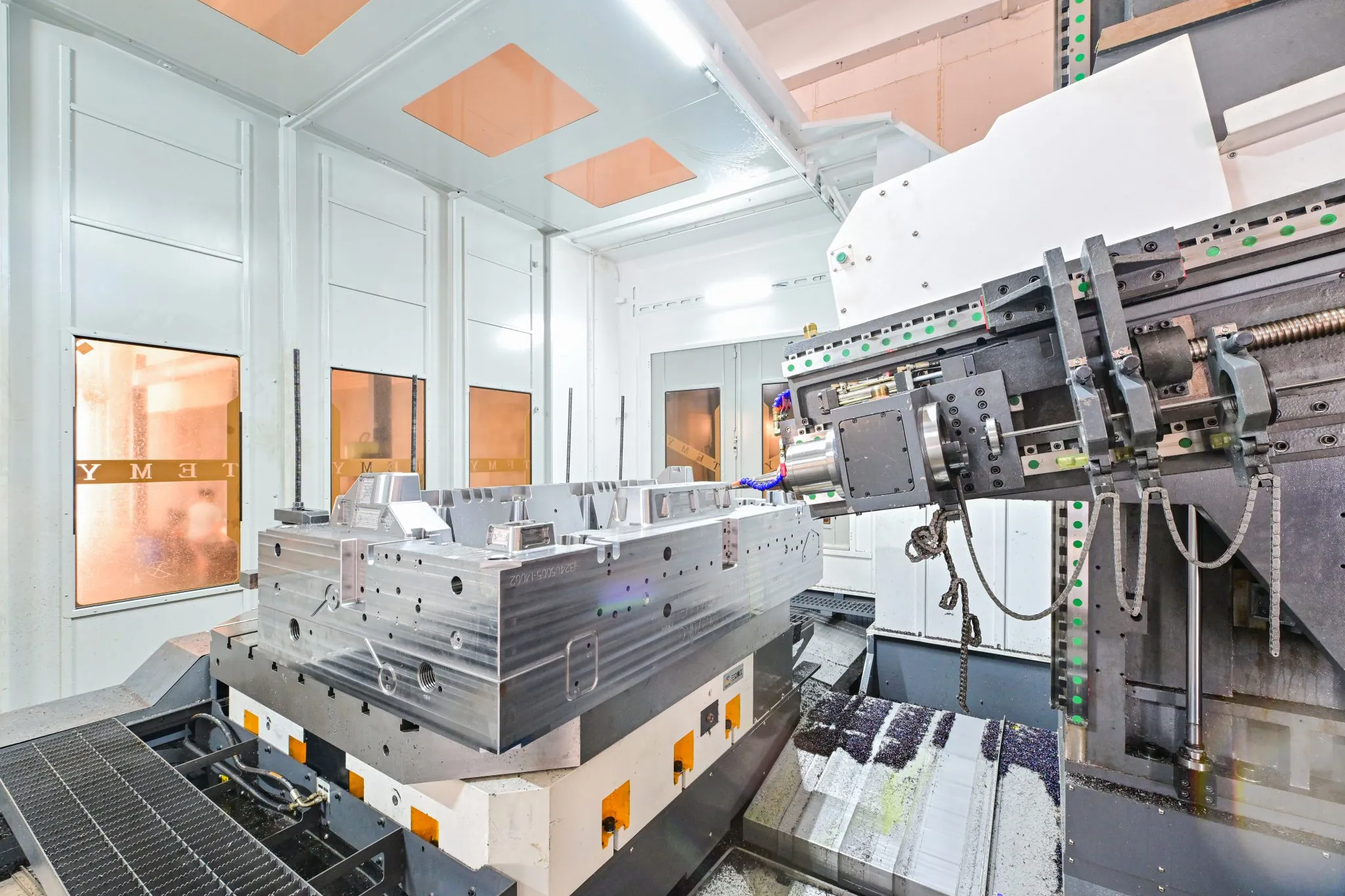
The best mold steel is not automatically the hardest or most expensive option. Production volume, resin, surface requirements, mold construction, maintenance expectations, and operating conditions all influence which production tooling material makes sense for an injection-molding program.
A material selected without those inputs may be over-specified for the job or may create avoidable maintenance and service-life problems later.
APT-Mold lists S136 and NAK80 among the high-strength materials used for production tooling. Those grades are useful reference points, but the real selection process begins with the duty the mold must perform rather than with a preferred steel name.
How Do You Choose Production Tooling Material for Injection Molding?
Start by defining the production requirement. A mold expected to run for an extended high-volume program faces different priorities from tooling intended for a shorter or less demanding production window. Repeated clamping, injection pressure, thermal cycling, ejector movement, slides, inserts, and shutoffs all create wear in different areas.
Four questions help narrow the choice:
- How many molding cycles are expected over the planned program?
- What resin and processing temperatures will the tool encounter?
- Does the part require a polished, textured, or otherwise demanding cavity surface?
- Which areas of the mold are likely to need maintenance, repair, or replacement?
APT-Mold states that its production tools are generally intended for much longer service than rapid tools, with a published range of roughly 100,000 to 3,000,000 shots. That range is not a guarantee for every mold; it illustrates why material selection has to be tied to geometry, process conditions, and maintenance.
Match Steel Properties to the Main Production Risk
Different mold-steel choices solve different problems. S136 is a stainless mold steel known for corrosion resistance, wear resistance, and good polishability. Those characteristics make it relevant when corrosion control, a demanding polished surface, or long-term surface condition is a major concern.
NAK80 is a pre-hardened mold steel commonly selected where uniform hardness, machining practicality, EDM performance, repairability, and high-quality polishing are important. Because it is supplied pre-hardened, it follows a different manufacturing route from steels that require final hardening after major machining operations.
The comparison is not a simple ranking:
| Selection priority | Material characteristic to emphasize | Example direction |
| Corrosion resistance or humid service | Stainless mold steel behavior | S136 may deserve closer review |
| High-quality polished or cosmetic surfaces | Polishability and surface stability | S136 or NAK80 may be candidates |
| Pre-hardened machining route | Uniform supplied hardness and machinability | NAK80 may be practical |
| Severe localized wear | Wear resistance plus replaceable inserts where appropriate | Evaluate the complete tool design |
These examples narrow the engineering discussion; they do not replace a project-specific material review.
Geometry and Mold Construction Matter as Much as the Grade
A mold is a system, so steel selection cannot be separated from the way the tool is built. Deep cavities, narrow shutoffs, textured surfaces, sliders, lifters, inserts, and moving contacts create localized demands that may not justify using the same material everywhere.
In some tools, a durable insert at a high-wear location is more sensible than increasing the specification of the entire mold base or cavity system. Cooling design also matters because stable thermal control influences dimensions, cycle repeatability, and the stress experienced by tooling over time.
Surface finish adds another layer. A material that machines easily is not automatically the best choice for a cavity requiring a demanding polish or texture. Finishing route, repair strategy, and expected maintenance should therefore be discussed before steel is ordered, not after mold construction has started.
Evaluate Tooling Across the Full Production Life
Initial steel cost is only one part of the economic picture. Tool manufacture, heat treatment where required, machining time, polishing, repair, planned maintenance, downtime, and replacement risk all contribute to lifecycle cost.
This is why tooling for mass production should be specified from an expected production duty rather than from a generic “premium material” rule. APT-Mold describes material selection in relation to production volume, operating temperature, part geometry, and application environment. That approach is more useful than treating S136, NAK80, or any other grade as universally superior.
Before approving tooling for mass production, engineering teams should document the expected shot count, resin, temperature range, critical surfaces, moving features, repair plan, and inspection requirements.
A well-defined material decision then becomes part of the overall mold strategy instead of an isolated purchasing choice.
Conclusion
Choosing production tooling material is a balance between service life, corrosion resistance, wear, machinability, surface finish, maintenance, and cost. S136 and NAK80 illustrate how different steel characteristics can support different mold priorities, but neither is a universal answer.
The most reliable selection starts with the resin, geometry, production volume, operating environment, and lifecycle plan. When those factors are defined together, tooling for mass production can be specified for the work it actually needs to perform without unnecessary over-engineering.

