Spring and autumn rarely deliver stable temperatures throughout the day. Cool mornings can give way to mild afternoons, while wind and shade may quickly make the same outfit feel insufficient. Clothing designed for these conditions needs to retain enough body heat without adding unnecessary bulk.
A well-selected thermal insulated fabric can provide a useful balance, allowing garments to feel comfortable across moderate temperature changes without the loft typically associated with heavy winter wear. For material developers such as Y-Warm, this creates an opportunity to rethink how insulation supports everyday clothing beyond extreme cold-weather applications.
Why Transitional Weather Calls for a Different Insulation Strategy
Winter garments are often designed to preserve warmth in prolonged cold conditions. Transitional clothing faces another challenge: the wearer may move between indoor heating, outdoor breezes, sunlight, and changing activity levels within a short period. Excessive insulation can cause overheating, especially during walking or commuting, while insufficient protection may leave the wearer uncomfortable in cooler conditions.
Loft is commonly associated with insulation because thicker structures can trap more still air. However, greater thickness is not automatically the most suitable option for every garment. In mild weather, a lower-profile thermal insulated fabric may offer sufficient resistance to heat loss while preserving a slimmer silhouette and easier movement.
The appropriate insulation level depends on more than the outdoor temperature. Garment coverage, wind exposure, humidity, physical activity, and the wearer’s base layers all affect perceived warmth. A jacket intended for daily commuting, for example, may require a different insulation arrangement from one designed for long periods of standing outdoors. Product development benefits from defining the intended use scenario before specifying material thickness.
How Insulation Thickness Influences Comfort and Mobility
Thicker insulation can increase the volume of a garment, affecting how it fits around the shoulders, elbows, waist, and cuffs. This may be acceptable in severe winter clothing, but transitional jackets often need to fit comfortably over shirts or lightweight knitwear. Reduced bulk can make layering easier and help preserve a more natural shape.
The structure of the insulation also matters. Materials with fine internal pores or air-trapping structures can provide thermal resistance without relying entirely on thickness. A carefully engineered thermal insulated fabric may help designers manage the relationship between warmth, weight, and flexibility, although actual performance depends on its construction and the surrounding garment layers.
Mobility should be assessed during ordinary movements rather than through appearance alone. Reaching forward, carrying a bag, cycling, or bending the arms can reveal whether insulation bunches up or restricts movement. Pattern design, lining selection, seam placement, and the distribution of insulation all contribute to the final fit. A thinner material is useful only when the finished garment still performs appropriately in its intended environment.
Balancing Warmth With Breathability and Layering
Temperature regulation becomes more complicated when a garment is worn across different activity levels. A wearer may feel comfortable while walking but become too warm after entering a heated building. If the clothing system releases excess heat and moisture slowly, discomfort can build even when the insulation itself is relatively lightweight.
Breathability and insulation perform different but connected functions. Insulation slows heat transfer, while air permeability and water-vapor transmission influence how heat and moisture move through the garment. Designers need to consider both properties, since a material that retains warmth effectively may still feel uncomfortable if the overall construction restricts moisture release.
Layering offers another way to adapt to fluctuating conditions. A lightweight outer layer with moderate insulation can be worn over a breathable base layer, while an additional mid-layer can be added on colder days. This approach gives wearers more flexibility than relying on one heavily insulated garment. The ideal thermal insulated fabric should suit the intended layering system, rather than being assessed independently from the clothing around it.
Material Selection and Practical Garment Development
Material evaluation should begin with the expected wearing conditions. Useful considerations include thermal resistance, weight, thickness, flexibility, moisture behavior, and how the material responds to repeated compression. These factors help determine whether an insulation option is appropriate for lightweight jackets, overshirts, vests, or other transitional garments.
Prototype testing can reveal issues that specification sheets cannot. Comparing garments with different insulation weights under similar conditions helps assess warmth, fit, and comfort during movement. Testing should also include indoor-to-outdoor transitions, since sudden changes in temperature are a defining feature of transitional-season wear.
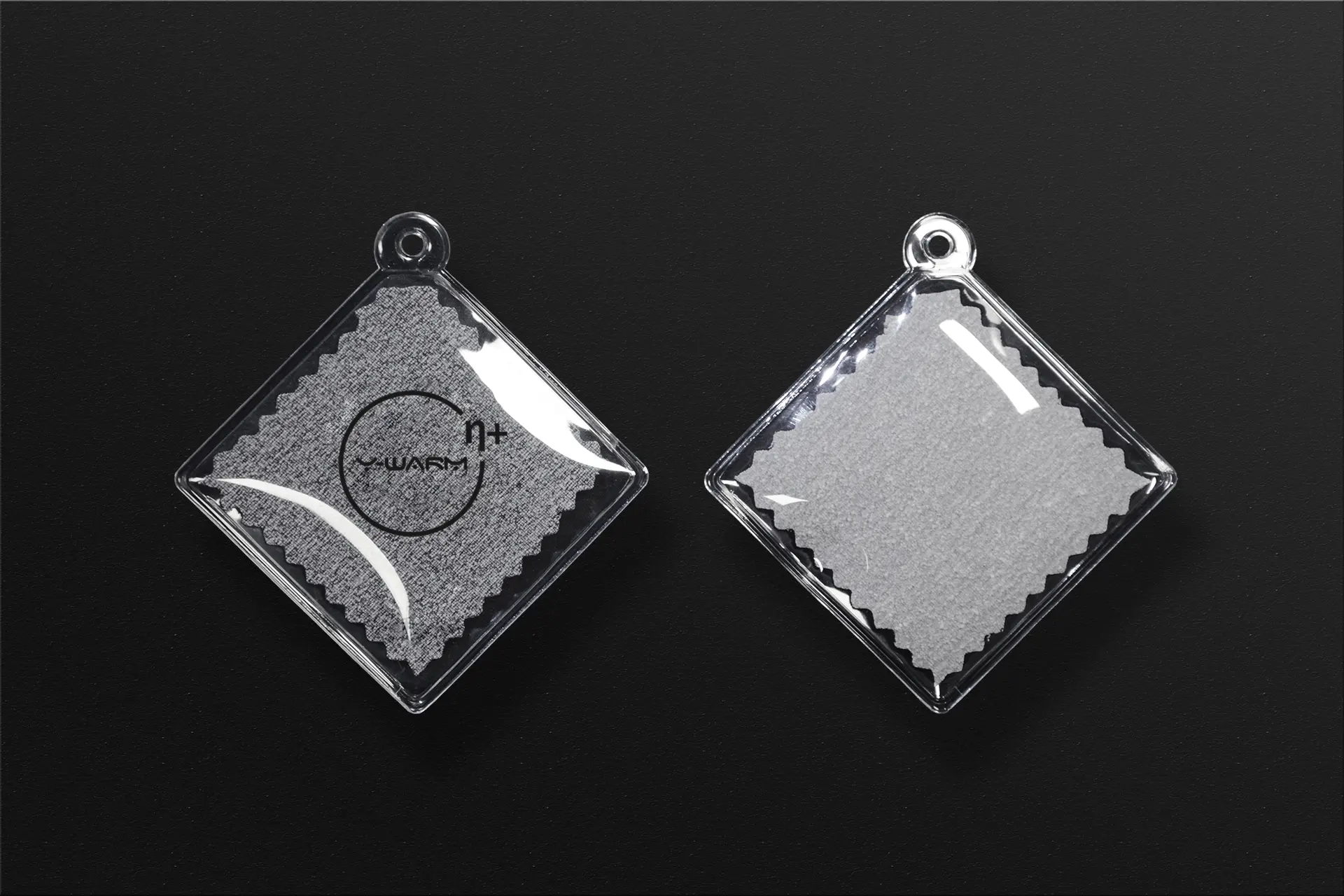
For brands communicating insulation technology to consumers, material identification can also support product transparency. Y-Warm’s sample display pouch contains a physical sample of its insulation material, allowing consumers to see the material used inside a garment. The pouch uses soft-touch TPU and measures 85 × 92 mm, providing a compact way to present the material itself without relying solely on technical descriptions.
Conclusion
Transitional clothing succeeds when warmth feels appropriate rather than excessive. The right balance comes from matching insulation structure and weight to the garment’s purpose, while accounting for mobility, breathability, and the realities of daily layering. Y-Warm develops thermal insulation materials for apparel applications and provides a sample display pouch that makes its material easier to view and identify. Apparel developers interested in lightweight insulation solutions can learn more about Y-Warm’s material technology when planning their next seasonal collection.

