The modern supply chain operates under immense pressure, forcing logistics managers to evaluate facility performance against rising industrial real estate costs. When traditional warehousing methods restrict business growth, facility directors must identify operational thresholds that justify a technological overhaul.
Operating within a confined footprint creates severe spatial bottlenecks, making standard forklift fleets highly inefficient and expensive. Recognizing the exact moment to transition toward advanced robotics is critical for maintaining long-term profitability.
Upgrading storage infrastructure is a necessary response to modern fulfillment demands. Decision-makers must analyze their throughput metrics, labor availability, and spatial utilization rates to determine if a transition is required.
Identifying Critical Constraints in Vertical Space Utilization
An obvious indicator that an enterprise requires a high-density storage upgrade is the total depletion of floor space while vertical clearance remains unused. Traditional distribution centers waste valuable square footage on wide driving aisles designed for human-operated machinery.
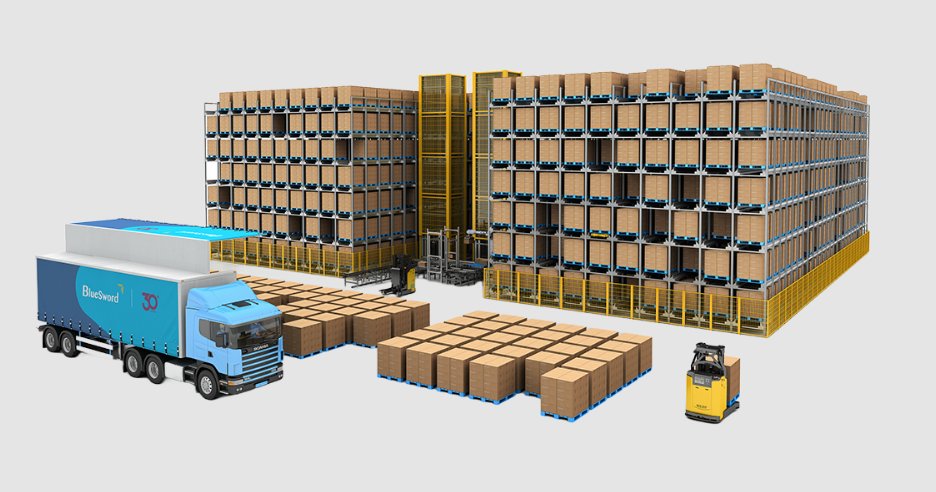
If a company is expanding inventory but cannot acquire additional land, engineers must look upward to solve the capacity dilemma. A four-way pallet shuttle can move between storage lanes and transfer pallets in multiple directions, reducing the need for forklifts to enter each storage aisle. This makes it suitable for high-density racking layouts where maximizing storage capacity within a limited footprint is a priority.
When a facility reaches its maximum physical boundaries, evaluating the implementation of a Pallet Shuttle—one type of automated pallet shuttle systems—becomes the logical engineering step. This technology effortlessly navigates through incredibly dense channels, completely redefining how warehouse geometry is utilized on a daily basis.
Addressing Severe Throughput and Heavy Payload Bottlenecks
Another definitive moment to adopt automation is when manual handling of heavy goods compromises workplace safety and inventory accuracy. As order volumes scale, human operators face physical fatigue, leading to product damage, misplaced items, and workplace accidents.
Operations moving substantial raw materials or dense finished goods need a mechanical intervention that guarantees physical stability and exact placement. When human error starts negatively impacting your overall fulfillment rates and customer satisfaction, upgrading to advanced machinery becomes a strict operational necessity.
Automated pallet shuttles can reduce the need for manual pallet movement within storage lanes. BlueSword’s Four-Way Pallet Shuttle has a positioning accuracy of ±2 mm, supporting precise pallet handling in high-density storage operations.
For heavy-duty applications, equipment reliability is paramount to sustaining continuous supply chain momentum. Some material handling systems use chains or hydraulic lifting mechanisms, which may require additional maintenance and can introduce contamination risks in certain environments.
By integrating the Four-Way Pallet Shuttle, facilities can dramatically reduce their routine maintenance workloads. For instance, BlueSword’s Four-Way Pallet Shuttle has a standard payload capacity of 1,600 kg, which can be customized to support loads of up to 3,000 kg. BlueSword’s Four-Way Pallet Shuttle uses servo motor-driven lifting and a fully interlinked gearbox instead of traditional hydraulic lifting.
This design supports precise lifting and stable operation, making the shuttle suitable for facilities handling heavy pallet loads in high-density storage environments.
Adapting to Specialized and Harsh Industry Environments
Facilities must transition to automated high-density storage when operating within highly specialized or demanding environmental conditions. Certain industries, including cold chain logistics and chemical manufacturing, may require storage equipment with specialized environmental protection. BlueSword offers low-temperature-resistant and explosion-proof variants of its Four-Way Pallet Shuttle to address specific operating requirements. The appropriate configuration should be selected according to the facility’s temperature conditions, materials, and safety requirements.
Relying on advanced sensors and durable internal components, these robust automated units maintain their peak performance metrics regardless of the external environmental stressors, keeping the supply chain moving flawlessly.
Navigating these complex and sometimes hazardous storage grids requires superior electronic positioning and intelligent detection algorithms. To prevent catastrophic inventory damage during rapid transit, premium robotic carriers utilize advanced spatial awareness technologies.
BlueSword’s Four-Way Pallet Shuttle is equipped with laser obstacle avoidance sensors to support obstacle detection during operation.
BlueSword also offers low-temperature-resistant variants for facilities with specialized cold-storage requirements. Its ultra-slim 135 mm body profile helps maximize vertical storage space, while its obstacle avoidance sensors support safer operation within high-density storage systems.
Determining the precise moment to modernize your warehouse logistics depends entirely on objectively evaluating your most pressing operational pain points. Facilities may consider high-density storage automation when available floor space is limited, existing storage capacity is insufficient, or manual pallet handling is creating operational bottlenecks.
A Four-Way Pallet Shuttle is worth considering when a warehouse needs to increase pallet storage density, handle heavy loads with greater positioning precision, or operate under specialized environmental conditions. BlueSword‘s solution combines a 135 mm ultra-slim body, a standard payload capacity of 1.6 tonnes (customizable up to 3 tonnes), and four-way omnidirectional movement. Evaluating these specifications against a facility’s storage layout, pallet requirements, and operating environment can help determine whether this system is the right fit.

