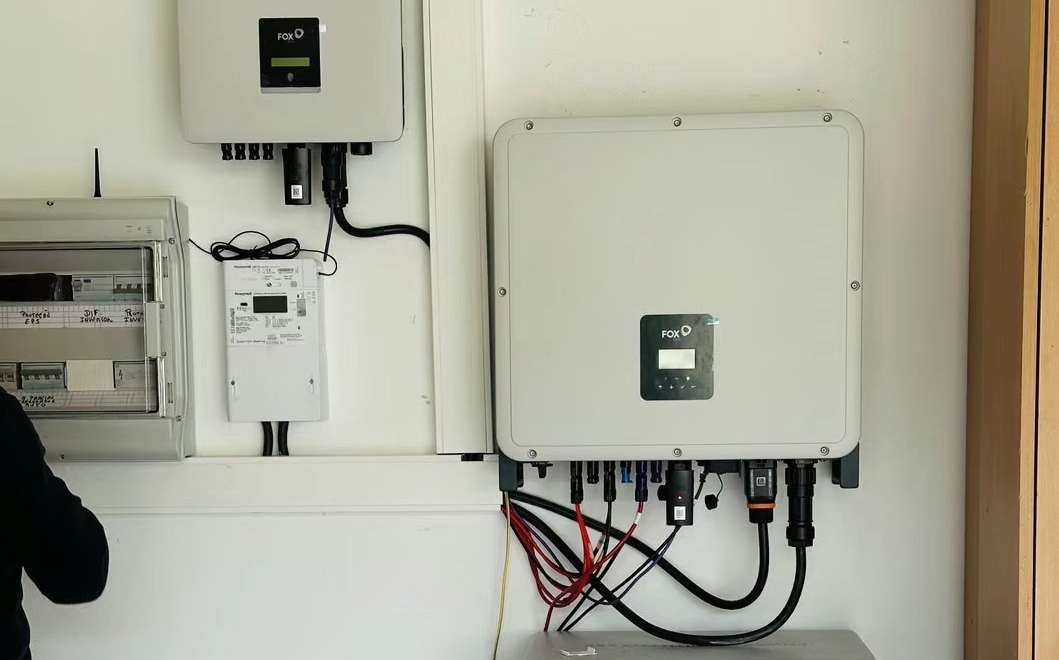
A hybrid inverter can sit quietly on a wall for years, but “low maintenance” does not mean “no maintenance.” Dust accumulation, damaged wiring, poor ventilation, abnormal indicators, and unresolved fault messages can gradually undermine reliable operation.
For homeowners and installers, the real maintenance question is therefore not simply how to clean an inverter, but how to detect deterioration before it becomes an operational failure.
Reliability Starts With the Installation Environment
Maintenance begins with the conditions surrounding the inverter. Heat, dust, moisture, restricted airflow, or physical deterioration can create problems even when the electrical system appears to be functioning normally.
The H1/AC1 inverter should be installed in a clean, dry, and adequately ventilated location. Proper cable sizing, input and output connections, wiring condition, configuration settings, and communication connections are also important for reliable operation and should be checked if abnormal operation occurs.
That makes the installation environment part of the maintenance strategy. An installer or system owner should avoid treating the inverter enclosure as an isolated component. Changes around the equipment—such as accumulated dust or deteriorating cables—can become early warning signs.
Build a Maintenance Routine Around Observable Checks
A practical routine should distinguish between frequent visual observation and periodic maintenance. For the H1/AC1 series, the user manual specifies that indicators and the display should be checked at least every six months. Input and output wires should also be checked at least every six months, while inverter panels should be cleaned and their security checked on the same interval. Cooling fins at the rear should be inspected for dust or dirt and cleaned when necessary.
Such intervals are more useful than an arbitrary “annual service” rule because different inspection tasks address different failure risks. Visual checks can reveal abnormal indicators or physical deterioration, while cleaning protects the equipment from conditions that may restrict heat dissipation.
Remote monitoring complements physical checks by providing ongoing visibility into system operation. The H1/AC1 supports monitoring through a smartphone app or web portal, allowing installers to review operating conditions remotely and identify unusual system behavior between scheduled site visits.
Treat Fault Messages as Diagnostic Evidence
Ignoring an alarm because the system later resumes operation can create a maintenance blind spot. A fault message contains information about what the system detected, so it should be recorded before further action is taken.
When a fault occurs, the H1/AC1 system displays a fault message on the system control panel or inverter information panel. Users should check and record the fault message before proceeding with troubleshooting. The documented troubleshooting process then directs attention toward the indicated solution and, where necessary, fundamental installation conditions such as breakers, wiring, configuration, display connections, and communication cables.
This is where choosing the best hybrid inverter involves more than comparing headline specifications. Accessible documentation and a defined troubleshooting path can make ongoing system management more systematic. Maintenance teams should follow the applicable model’s manual rather than applying procedures copied from another inverter family.
A Practical Reference From Fox ESS
The H1/AC1 series features IP65 protection for outdoor installation and supports remote monitoring through a smartphone app or web portal. The series is also supported by dedicated user manuals and technical resources for installation, operation, and maintenance.
Remote access can reveal operating abnormalities, but technicians still need to assess the physical installation. Signs of cable deterioration, accumulated dirt, restricted airflow, or other visible changes may not be adequately addressed through monitoring data alone.
The H1/AC1 series equips installers with model-specific guidance for routine checks. By integrating advanced monitoring, built-in protection features, and structured maintenance procedures, Fox ESS provides service teams with a reliable framework for managing equipment throughout its operational life.
Keep Long-Term Reliability Under Professional Control
Routine observation should not be confused with authorization to perform electrical work. The H1/AC1 series requires a safety check at least every 12 months by a qualified technician with appropriate training, knowledge, and practical experience. The results of each safety check should be recorded in the equipment log.
That annual check creates an important boundary. Owners can observe displays, notice unusual conditions, and report faults, while qualified personnel handle prescribed safety testing and repair work. If the equipment fails a safety test or is not functioning correctly, the manual states that it must be repaired.
Fox ESS provides model-specific manuals and technical resources for installation, maintenance, and troubleshooting. Keeping the applicable manual together with the inverter model information, serial number, fault records, and service history can help make subsequent inspections more systematic.
Reliable operation depends on consistent monitoring and maintenance. A hybrid inverter should be monitored through its operating environment, physical condition, indicators, wiring, and fault history, while scheduled safety checks should be performed by qualified technicians. Following the specified inspection intervals and referring to the applicable manual when faults occur helps support consistent system operation and maintenance.

