Automotive manufacturing is becoming more flexible as production facilities respond to changing vehicle designs, shorter production cycles, and diversifying assembly requirements. This shift places new demands on material handling systems. Cranes are no longer simply expected to move heavy loads from one point to another. They need to support precise positioning, efficient workflow, reliable operation, and changes in production layouts.
For this reason, selecting the right crane components has become an important part of designing and upgrading lifting systems for automotive facilities. Components such as hoists, gearmotors, end carriages, lifting attachments, and electrical systems must work together to provide stable movement throughout demanding production environments.
Why Automotive Production Requires More Flexible Lifting
Automotive factories typically involve multiple processes, including stamping, welding, painting, powertrain assembly, final assembly, and equipment maintenance. Each area can have different lifting requirements. Heavy dies may need to be transported in a stamping facility, while engines, batteries, body components, or production tooling may require more controlled handling during assembly.
As production lines become more adaptable, fixed lifting systems can create limitations. A crane system should be able to operate within available building space while providing sufficient lifting capacity and travel performance.
An automotive overhead crane can support these requirements by using the overhead space of a facility without occupying valuable floor area. However, the crane’s overall performance depends heavily on the compatibility and quality of its individual components.
Key Crane Components for Automotive Applications
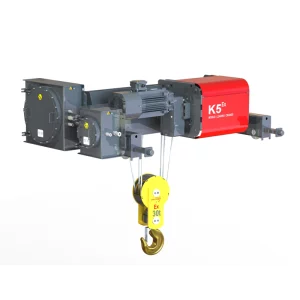
A complete lifting system consists of multiple mechanical, structural, and electrical elements. The bridge provides the primary horizontal structure, while end carriages support longitudinal movement along the runway. The hoist provides vertical lifting, and the trolley allows the load to move across the bridge.
Gearmotors are particularly important for controlled crane travel. They combine motor and gearbox functions to provide the torque required for movement while maintaining appropriate speed. For automotive plants where positioning accuracy matters, selecting a suitable gearmotor can help achieve smoother starts, stops, and travel.
End carriages also influence the stability of crane movement. Their design must correspond with the runway configuration, crane span, load requirements, and available building clearance. WORLDHOISTS provides end carriages and gearmotors as part of its crane component portfolio, supporting different crane configurations and project requirements.
Choosing a Crane for Car Manufacturing
When selecting a crane for car manufacturing, engineers need to consider more than rated lifting capacity. The duty cycle, load characteristics, lifting frequency, travel distance, headroom, operating environment, and required positioning performance all affect component selection.
For example, a crane handling heavy dies may require a different configuration from equipment used to position smaller assemblies. Similarly, a facility with limited headroom may benefit from compact components that maximize usable lifting height.
Compatibility is another important consideration. A replacement component that does not properly match the existing crane can create installation difficulties, additional engineering work, or premature wear. Standardized interfaces and properly matched mechanical and electrical systems can simplify installation and maintenance.
Supporting Modern Industrial Crane Systems
An industrial crane for auto production should also accommodate the operational demands of modern factories. Production interruptions can affect multiple downstream processes, making maintainability an important consideration when specifying components.
Regular inspection of hoists, brakes, ropes, wheels, gearmotors, end carriages, electrical connections, and lifting attachments helps identify potential problems before they develop into costly failures. Component availability is equally important for long-term equipment management.
WORLDHOISTS offers crane kits, lifting attachments, gearmotors, and end carriages, allowing customers to source multiple parts through one product system. Its crane components are designed for integration across different crane architectures, while technical support and solution drawings can assist with project planning and equipment selection.
Upgrading Existing Automotive Lifting Equipment
Not every manufacturing facility needs to replace an entire crane system when production requirements change. In many cases, upgrading selected components can provide a practical way to improve existing equipment.
A new gearmotor, end carriage, control system, or lifting attachment may address specific operational requirements without requiring a complete reconstruction of the crane. Before upgrading, however, engineers should assess the existing bridge structure, runway condition, electrical system, load capacity, duty classification, and component interfaces.
This approach is particularly useful when production layouts evolve gradually. A properly planned component upgrade can help extend equipment service life while reducing the disruption associated with installing an entirely new lifting system.
Selecting Crane Components with the Whole System in Mind
The most important consideration when purchasing crane components is not the specification of an individual part in isolation. Each component must work as part of a complete lifting system.
Load capacity, travel speed, duty class, installation dimensions, environmental conditions, controls, safety functions, and maintenance requirements should be evaluated together. This system-level approach can reduce compatibility problems and make future maintenance more straightforward.
WORLDHOISTS provides crane kits and components for overhead, bridge, and gantry crane applications, with options including gearmotors, end carriages, and lifting attachments. The company also provides technical tools such as KING Software to help with crane configuration and component selection based on project requirements.
Building More Adaptable Lifting Systems
Automotive manufacturing will continue to evolve toward flexible production, making adaptable material handling increasingly important. Crane systems must support changing workloads and production arrangements while maintaining safe and controlled movement.
The right combination of structural, mechanical, electrical, and lifting components can make a significant difference to crane performance and maintainability. Instead of evaluating components separately, manufacturers and engineering teams should consider how each part contributes to the complete lifting system.
With its range of crane kits, gearmotors, end carriages, lifting attachments, and related systems, WORLDHOISTS provides component options for projects involving new crane installations as well as equipment upgrades.
As automotive facilities become more flexible, well-matched crane components can help create lifting systems that are easier to integrate, maintain, and adapt. Careful component selection at the design stage provides a practical foundation for reliable material handling across changing production environments.

