Municipal water treatment works handle sewage, sludge, and chemicals where hazardous atmospheres can develop. Hydrogen sulfide, chlorine, carbon monoxide, methane, and oxygen deficiency present different risks depending on the process. Portable monitoring helps workers assess conditions during inspections, maintenance, and confined-space work. Selection depends on target gases, sensor configuration, sampling method, alarms, and site procedures—not simply the number of channels.
- Where Toxic Gas Risks Occur in Water Treatment
Gas hazards arise at several treatment stages. Hydrogen sulfide may form as organic matter decomposes under anaerobic conditions, particularly in sewers, wet wells, lift stations, sludge tanks, and enclosed channels. It is toxic and flammable, and can accumulate in low-lying spaces. Odor is not a dependable warning because the sense of smell can become fatigued.
Chemical disinfection can introduce chlorine exposure, while engines may produce carbon monoxide. Methane can accumulate in sewer networks or sludge-handling areas. Oxygen levels can also fall in enclosed spaces, making a multi-hazard assessment essential.
- Why Portable Monitoring Matters
Fixed detectors monitor selected locations, but maintenance crews move between tanks, channels, pump rooms, and underground access points. A portable instrument travels with the worker and provides readings near the breathing zone. It is useful for inspections, leak investigations, servicing, and temporary work areas.
A portable toxic gas detector should be selected according to a documented hazard assessment. The required sensors must match the substances that may be present; a four-gas configuration is not automatically suitable for every treatment plant. For example, a standard combination may cover oxygen, combustible gases, hydrogen sulfide, and carbon monoxide, while chlorine or ammonia may require a different sensor configuration.
- What Buyers Should Evaluate Before Purchasing
The first consideration is sensor suitability. Procurement teams should identify each target gas, expected concentration range, required resolution, and applicable exposure limits. Response time and alarm thresholds also matter, but alarm settings should be established by competent safety personnel in accordance with regulations and site procedures.
Sampling method is another practical factor. Diffusion instruments measure the surrounding atmosphere and are convenient for personal monitoring. Pumped instruments can draw samples from a remote point, which is useful when checking a space before entry. Where confined-space work is involved, atmospheric testing should be performed from outside first, followed by continuous or periodic monitoring as required by the entry program.
Compare alarm types, display readability, battery endurance, ingress protection, hazardous-area certification, calibration, and data recording. A gas detector manufacturer should document the sensor combination, calibration process, maintenance interval, and limitations. Consultation with the gas detector manufacturer can clarify whether optional sensors are needed for site-specific hazards.
- BoseanBH-4S for Portable Multi-Gas Checks
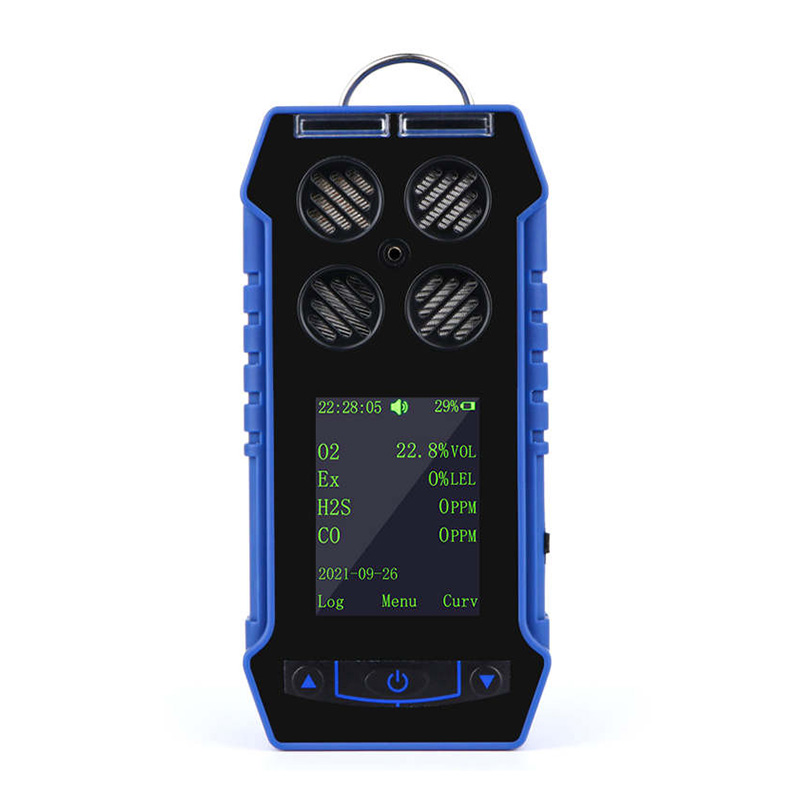
The Bosean BH-4S is a portable four-in-one multi-gas detector intended for locations where explosion protection is required or toxic gas leaks may occur, including underground channels and mining environments. Its stated design uses natural diffusion sampling and high-sensitivity sensors, with an emphasis on sensitivity and repeatability.
A built-in 32-bit microcontroller supports instrument control and adaptive operation. The four-channel format can help operators monitor multiple selected hazards with one handheld unit, provided the sensor configuration matches the gases identified in the plant’s risk assessment. Buyers should confirm which four sensors are installed, their ranges, alarm settings, and certification before specifying the instrument for a municipal facility.
For a portable toxic gas detector, ease of use is important because workers may need to interpret readings while wearing gloves or working in restricted spaces. The BH-4S can be considered for routine mobile checks where its configured sensors meet the task requirements. As with any monitor, it should be maintained, calibrated, bump-tested, and used according to the manufacturer’s instructions and the site’s safety program.
- Integrating Portable Detectors into Safe Work Procedures
Equipment alone does not make confined-space work safe. Before entering a wet well, manhole, tank, or sewer, employers should identify hazards, isolate equipment and lines, and follow the applicable permit system. Test from outside first, sample at appropriate levels, and continue monitoring when conditions can change.
Workers need training on sensor limitations, alarm response, evacuation, and the danger of relying on smell. A monitor does not authorize entry into an unsafe space. Plan rescue arrangements in advance, with trained personnel and suitable equipment; unprotected coworkers should never attempt an improvised rescue.
A portable toxic gas detector belongs in a managed instrument program. Assign responsibility for inspection, calibration, bump testing, fault reporting, and records. A qualified gas detector manufacturer can explain maintenance requirements, but employers remain responsible for risk assessment, training, and safe procedures.
Building a More Reliable Monitoring Program
Municipal treatment facilities need portable gas monitoring that reflects the actual hazards of each process and task. The Bosean BH-4S offers a compact four-gas format with diffusion sampling and a 32-bit control platform, but its suitability depends on the installed sensors and the plant’s exposure profile. Buyers should verify specifications and certification before deployment.
Choosing equipment from a capable gas detector manufacturer is only one part of the decision. Matching sensors to site hazards, maintaining instruments, and integrating readings into permit procedures are equally important. A portable toxic gas detector supports this program only when its configuration fits the task.

