Reliability becomes easier to judge when a proposal is followed beyond opening day. A supplier may present an impressive attraction, yet the owner still needs to understand how design decisions, production checks and later technical support connect. Those connections are more useful evidence than a confident sales description.
A water park factory is part of that picture, but its size does not answer every question. Assessment needs to establish what the business makes, how it develops a site-specific design and what assistance remains available once the equipment is operating.
Begin with the Support an Operating Park Needs
Maintenance exposes whether useful information survives the sale. A replacement component must be identifiable by its equipment reference, an observed fault must reach the appropriate person, and the operator needs a record of what has already been checked. A general promise of support gives little detail about those practical tasks.
Daily observation and specialist servicing are not interchangeable. Staff looking for visible damage or loose parts need different instructions from technicians examining controls and structural connections. Among water park manufacturers, a meaningful aftercare discussion separates those responsibilities instead of describing every intervention as routine maintenance.
Records give that discussion continuity. Dates, observations, corrective work and unresolved actions make a recurring problem easier to distinguish from a new one. The relevant evidence is an organised support arrangement, not an assumption that technical advice removes the need for inspections on site.
Follow Production Claims into the Workshop
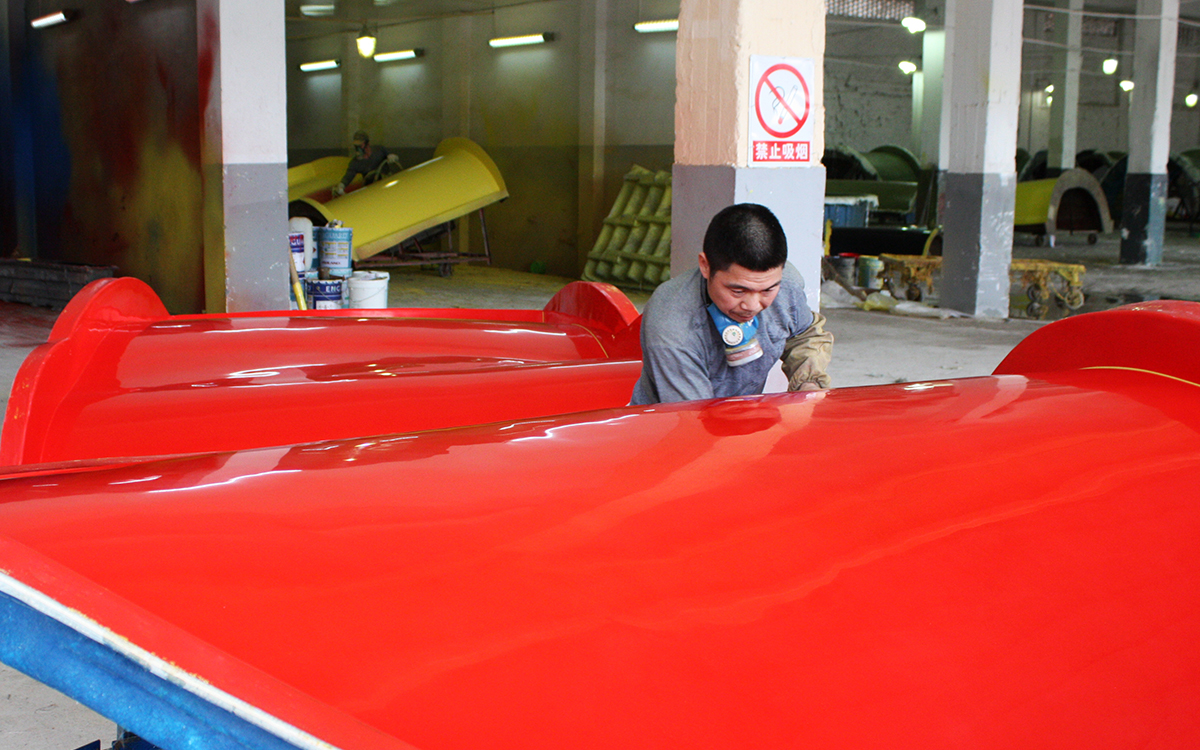
Ownership and capability deserve separate questions. Establishing that a supplier operates a water park factory is useful, but the next step is understanding which manufacturing tasks happen there and how the proposed equipment moves through them. Floor area alone cannot explain process control.
Material selection, fabrication and checks on finished components address different risks. A description of modern equipment becomes informative when it is connected to the work being purchased. Comparing water park manufacturers on that basis avoids treating a single production feature as proof of every aspect of quality.
Photographs of welding equipment, for example, do not reveal which joints were inspected on a particular order. A production discussion can connect the component, the relevant check and the person responsible. That is a more precise question than asking whether quality control exists.
An approximately 36,000 m² manufacturing base forms part of Jinchao’s project capability. Its manufacturing includes robotic welding and production process control. These are specific capabilities to discuss against the proposed equipment package, alongside the drawings and inspection responsibilities that connect fabrication with the finished installation.
Test Whether Design Responds to the Actual Site
A convincing design explains its decisions. The attraction mix, layout and support arrangements need to answer the available space, intended visitors and investment brief. A rendering demonstrates appearance; a coordinated proposal also explains how the attraction can be installed and used in that location.
A company’s water park factory and design service need to work from the same configuration. Changes agreed during design affect what is manufactured, so the final arrangement must remain identifiable through the project. Without that connection, an attractive revision can become an unresolved production instruction.
Relevant project references provide another check on design claims. Similar site constraints matter more than an impressive total area: an enclosed building, a restricted installation route or an existing pool can pose different coordination problems. The reference is useful when the supplier’s contribution is also clear.
Jinchao develops projects around the investor’s site and budget, with design, engineering and installation personnel supporting different stages. Investors who contact Jinchao can use a measured site brief to discuss that relationship. The useful outcome is a proposal whose design choices can be traced to real requirements.
Clarify the Boundary of Installation Guidance
On-site guidance is a defined service, not a substitute for identifying every construction responsibility. Foundations, lifting, assembly resources and equipment connections still need named parties. A credible installation discussion explains how the supplier’s input fits the local team’s work and the agreed sequence.
Jinchao can assign professional engineers to guide equipment installation. A contractor can contact Jinchao about the drawings and proposed installation responsibilities before those interfaces are fixed. The enquiry is most productive when it identifies the site work already planned and the technical decisions still awaiting agreement.
Aftercare belongs in the same scope review. The company’s support includes maintenance guidance, technical assistance and replacement-part assistance. Those services complement the operator’s own inspection arrangements; the project agreement needs to make the practical route for reporting and following up equipment issues clear.
Compare Evidence on a Like-for-Like Basis
The strongest shortlist is built from comparable evidence. A relevant layout, identified production capability and defined support responsibilities can be examined together. Assessing water park manufacturers becomes less speculative when each answer refers to the same project rather than a different example or general service claim.
A review team may contact Jinchao with the remaining questions grouped around design, manufacture, installation and aftercare. That structure keeps the discussion specific without assuming that every project needs the same attraction package. Written answers can then be compared with the scope under consideration.
Confidence rests on continuity: the equipment described in the proposal must remain recognisable through production and operation. One question brings that evidence together. Can the same project be followed from the agreed drawing to a defined support contact after opening?

