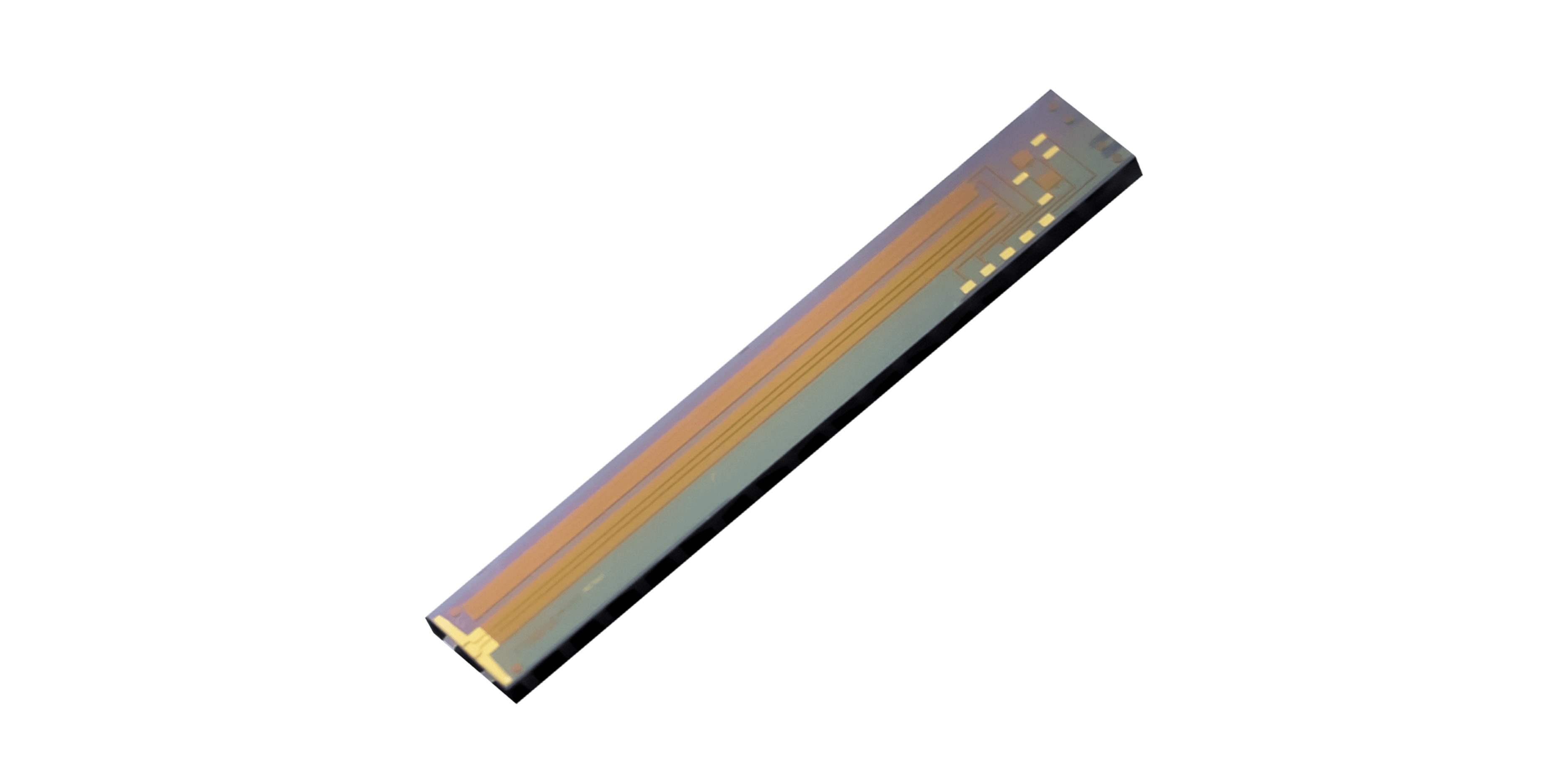
High-speed optical links depend on a modulator that can follow rapid electrical signals without consuming excessive power or exhausting the optical budget. When they compare technologies, they look beyond nominal data rate and examine how bandwidth, drive voltage, insertion loss, linearity, and packaging interact.
That combined view explains why thin-film lithium niobate deserves serious attention. The Mach-Zehnder interferometer is especially useful because it converts a controlled phase difference into an intensity change.
Its behavior is well understood, yet modern materials and fabrication methods can substantially improve its scale and performance. For engineering teams, this creates a familiar operating principle with new options for compact integration and higher electrical bandwidth.
In demanding photonic applications, a lithium niobate Mach-Zehnder modulator can provide an effective bridge between high-speed electronics and the optical carrier. They consider it useful when its measured characteristics support the target link architecture, not simply because lithium niobate has a long history in optical modulation.
Why the Mach-Zehnder Structure Remains Relevant
The device divides light between two paths and then recombines it. An applied electric field changes the phase in one or both arms, producing constructive or destructive interference at the output. They favor this structure for its controllable transfer function, which can support intensity modulation and form part of more complex coherent transmitters.
The official Liobate material says TFLN implementations can offer higher electro-optic bandwidth, lower drive voltage, and lower insertion loss than several alternative platforms.
For photonic applications, that combination may ease the work of the driver, protect optical power, and support faster signaling. The practical gain still depends on electrode design, waveguide loss, coupling, and package quality. A lithium niobate Mach-Zehnder modulator also gives system designers several operating choices.
Single-drive and dual-drive arrangements, push-pull operation, bias position, and electrode termination can be adapted to the intended waveform. They review these details early because they influence the electrical interface, control loop, linearity, and extinction ratio available in the final product.
The structure can also be adapted for analog and measurement use, where linear response and low distortion become central. They examine the transfer curve over the required swing and optical power, since digital extinction data alone does not show whether the device is suitable for precise waveform generation.
Balancing Bandwidth, Voltage, and Optical Loss
Bandwidth determines how faithfully the device responds to high-frequency content, but it should not be considered in isolation. A broad small-signal response may still show ripple or phase distortion that affects real waveforms.
They therefore ask for frequency-response plots, measurement conditions, package details, and data that relate laboratory bandwidth to supported symbol rates. Drive voltage influences both electronics and power. Liobate identifies Mach-Zehnder intensity-modulator implementations with bandwidth of at least 67 GHz and also describes low-voltage TFLN designs.
Within photonic applications, these characteristics can help reduce driver swing, although impedance matching, losses in the electrical interconnect, and required linearity still determine the actual energy consumed. Insertion loss completes the central trade-off.
A lithium niobate Mach-Zehnder modulator with lower optical loss can preserve more margin for splitting, multiplexing, fiber transmission, or receiver sensitivity. Buyers should clarify whether quoted loss includes fiber coupling and packaging, because a bare-chip number cannot be compared directly with a connectorized device specification.
Turning Device Specifications into Link-Level Value
The commercial value becomes visible after the modulator is placed in a realistic link. They model the laser power, driver output, modulator transfer function, channel loss, receiver requirements, and digital equalization together. This allows them to determine whether a device reduces total power, extends reach, increases capacity, or simply shifts complexity to another subsystem.
Qualification should include extinction ratio, bias drift, optical return loss, polarization sensitivity, environmental behavior, and unit-to-unit variation. A lithium niobate Mach Zehnder modulator may be intended for data-center, telecom, or test equipment, and each market uses different acceptance limits.
Photonic applications therefore need test plans tied to the actual operating environment. Packaging deserves particular attention at high frequency. Liobate emphasizes fiber-to-chip coupling, broadband electrical connections, and hybrid integration among its platform capabilities.
They see these as important because poor transitions can reduce the bandwidth or increase loss that the chip itself was designed to improve. Procurement teams should request a clear boundary between typical values and committed performance limits.
They also need information on sample lead time, package options, test reports, process changes, and production capacity. This makes technical comparison more disciplined and helps avoid designing around a result that was achieved under unusual laboratory conditions. They would not select a modulator solely from a material comparison.
Silicon, indium phosphide, bulk lithium niobate, and TFLN each have different integration strengths. The appropriate choice depends on link reach, volume, packaging strategy, driver capability, optical architecture, and the maturity required for the launch schedule.
The supplier provides a practical reference point for evaluating TFLN Mach-Zehnder devices with high bandwidth and controlled loss. The case is clearer when those device characteristics are confirmed in the customer’s package and waveform. Used with realistic qualification, the technology can support high-speed links while keeping electrical, optical, and manufacturing trade-offs visible.
Pilot builds turn modulator specifications into limits that purchasing and manufacturing teams can use. By running Liobate hardware with representative drivers, fibers, and temperatures, the program can set acceptance boundaries from observed link behavior.

